
What makes a product truly sustainable? Beyond its environmental footprint, there is another important dimension to consider: the people involved throughout its life cycle.
In the first part of our Life-cycle thinking series, we explored how Life Cycle Assessment (LCA) and Prospective LCA (pLCA) help evaluate environmental impacts, from raw material extraction to end-of-life treatment.
But what about the working conditions, human rights, health and well-being of the people involved in these processes? This is where Social Life Cycle Assessment (S-LCA) comes into play.
What is S-LCA?
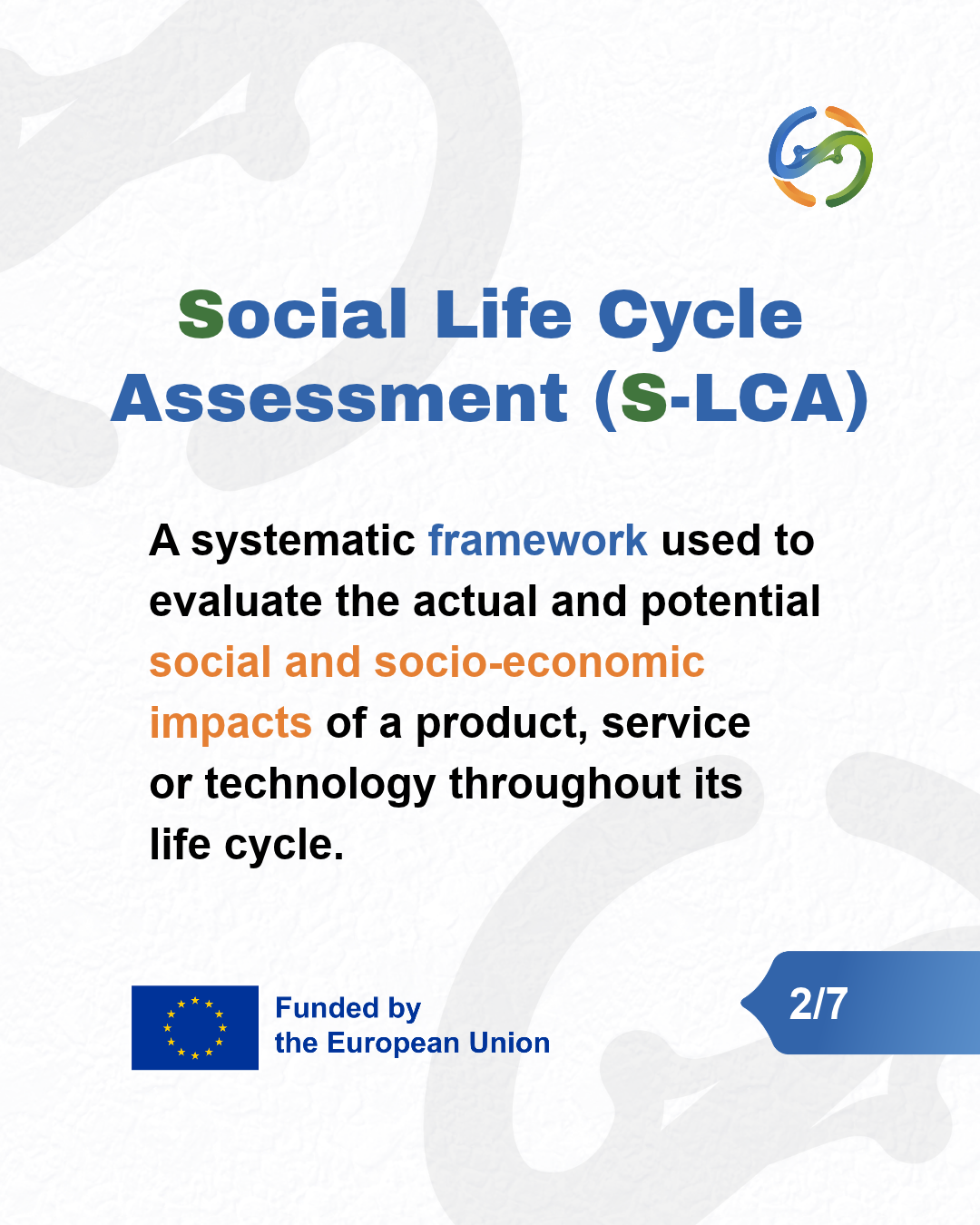
Social Life Cycle Assessment (S-LCA) is a systematic methodology used to evaluate the actual and potential social and socio-economic impacts of a product, service or technology throughout its life cycle.
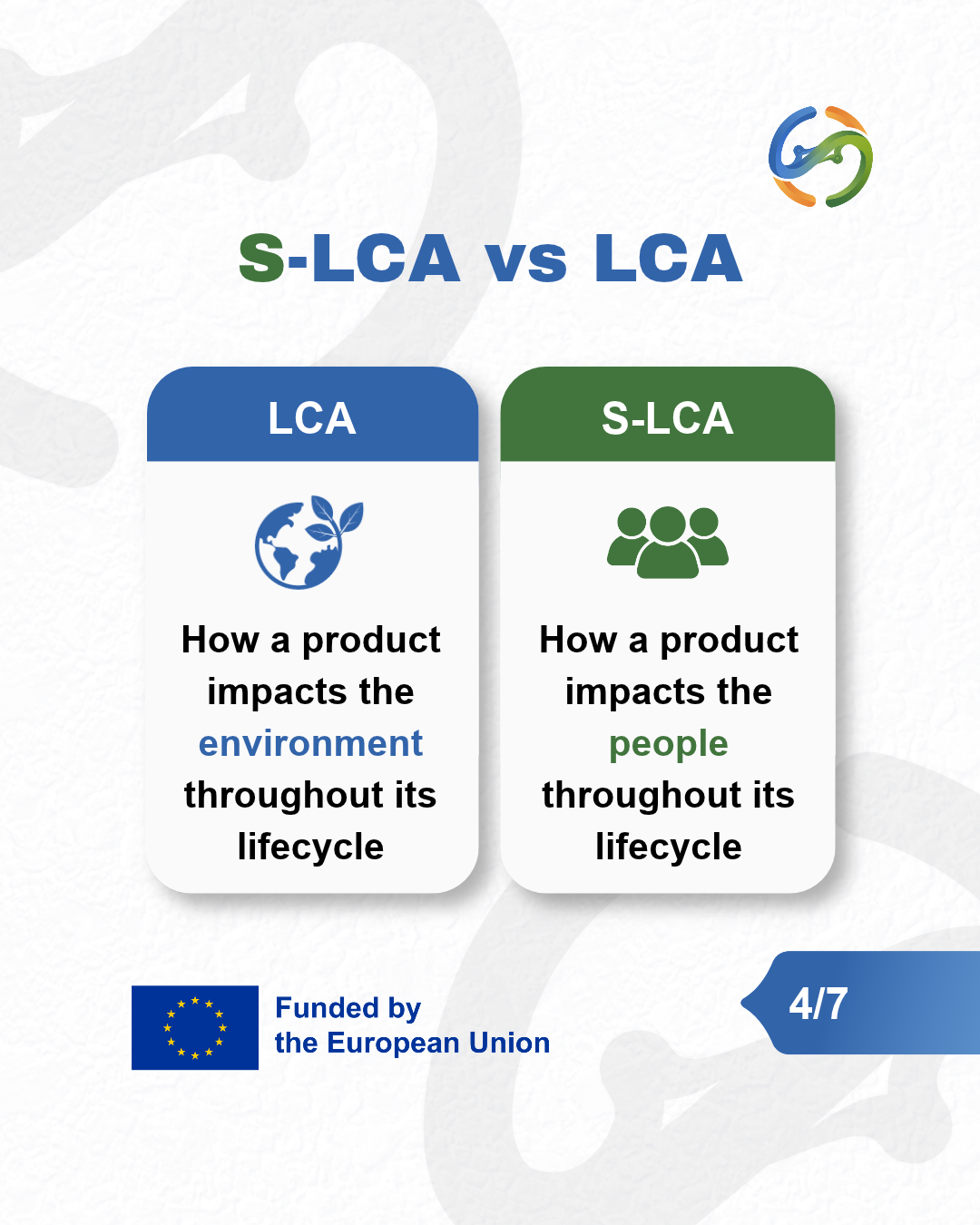
While environmental LCA focuses on aspects such as emissions, resource consumption and climate change, S-LCA examines how activities across a product's value chain affect people and communities.
Let’s look at an example using a cotton T-shirt. An environmental LCA might examine water consumption during cotton cultivation, energy used in manufacturing or emissions generated during transport. Social LCA, on the other hand, asks different questions: Are cotton farmers paid fairly? Do garment workers have safe working conditions? How does textile production affect surrounding communities?
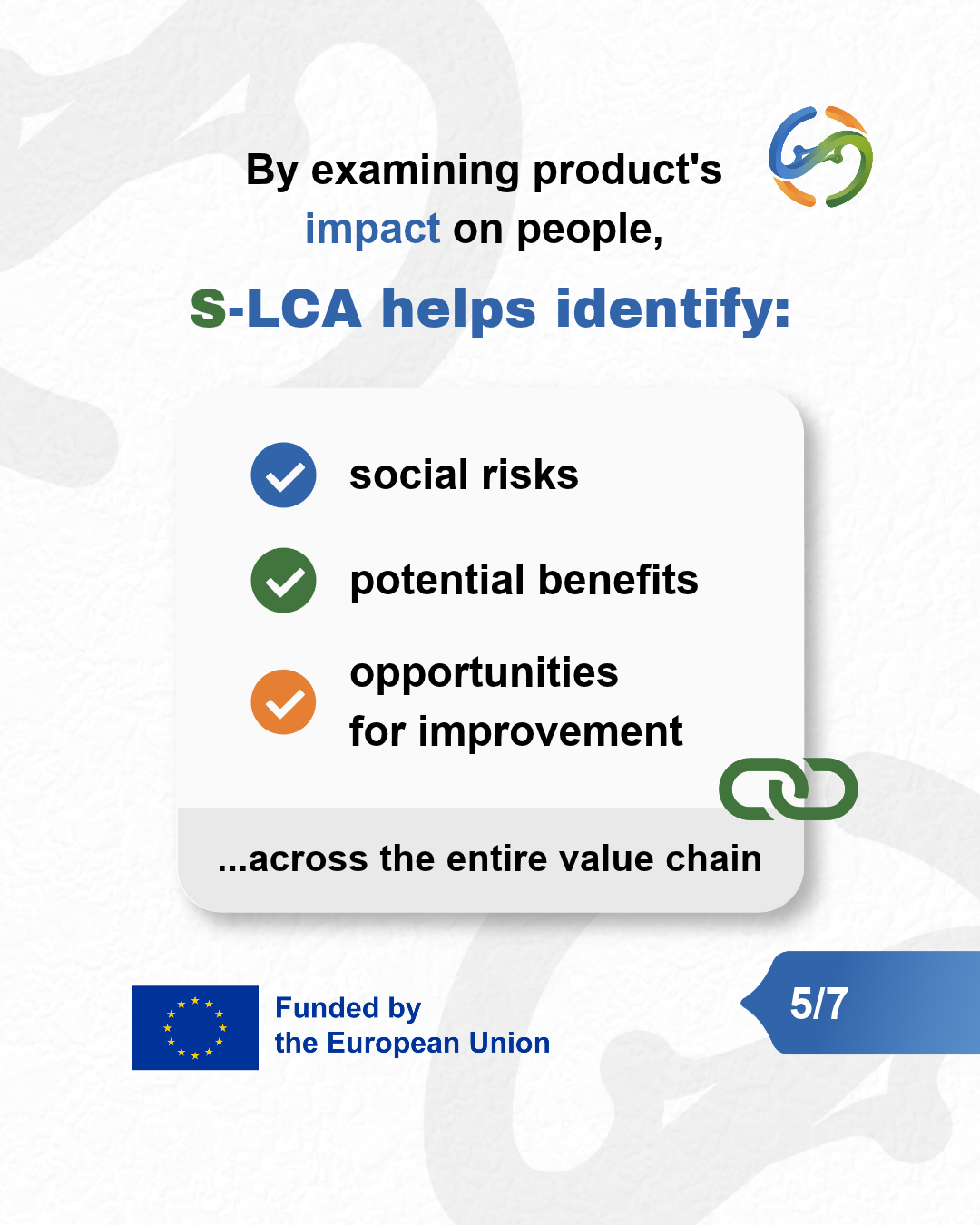
By addressing these questions, S-LCA helps identify social risks, potential benefits and opportunities for improvement across the entire value chain.
What does S-LCA assess?
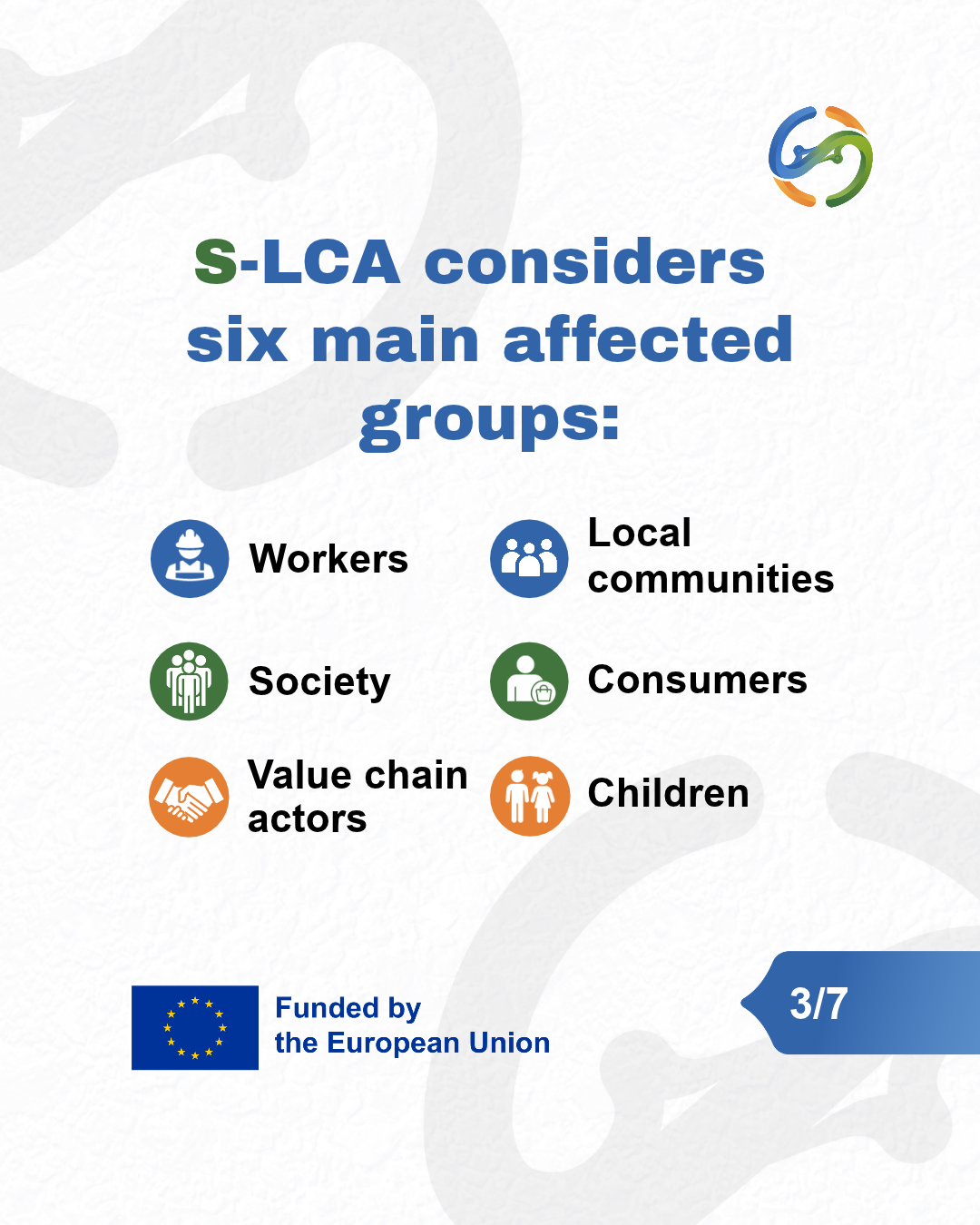
According to the United Nations Environment Programme (UNEP) Guidelines, S-LCA considers six main stakeholder groups affected by activities across a product's life cycle:
Workers – fair wages, working conditions, occupational health and safety, labour rights
Local communities – access to resources, employment opportunities, living conditions and cultural heritage
Consumers – product safety, transparency, privacy and responsible consumption
Society – economic development, ethical business practices and broader societal well-being
Value chain actors – fair competition, responsible supplier relationships and social responsibility
Children – protection of children's rights, health, education and well-being
In contrast with environmental LCA, that largely relies on quantitative data to calculate environmental impacts, sLCA often combines quantitative and qualitative data, including employment statistics, company policies, occupational safety records and stakeholder feedback.
This information helps identify social hotspots – areas of the value chain where significant social risks or impacts may occur – and supports more informed decisions about sourcing, production and product development.
Importantly, S-LCA considers both negative and positive social impacts. Beyond identifying risks such as unsafe working conditions or discrimination, it can also assess potential benefits, including job creation, skills development and contributions to local communities.
Why does S-LCA matter for BLESS?
Environmental impact alone cannot provide a complete picture of sustainability. Understanding social impacts is equally important, particularly when developing new materials and technologies.
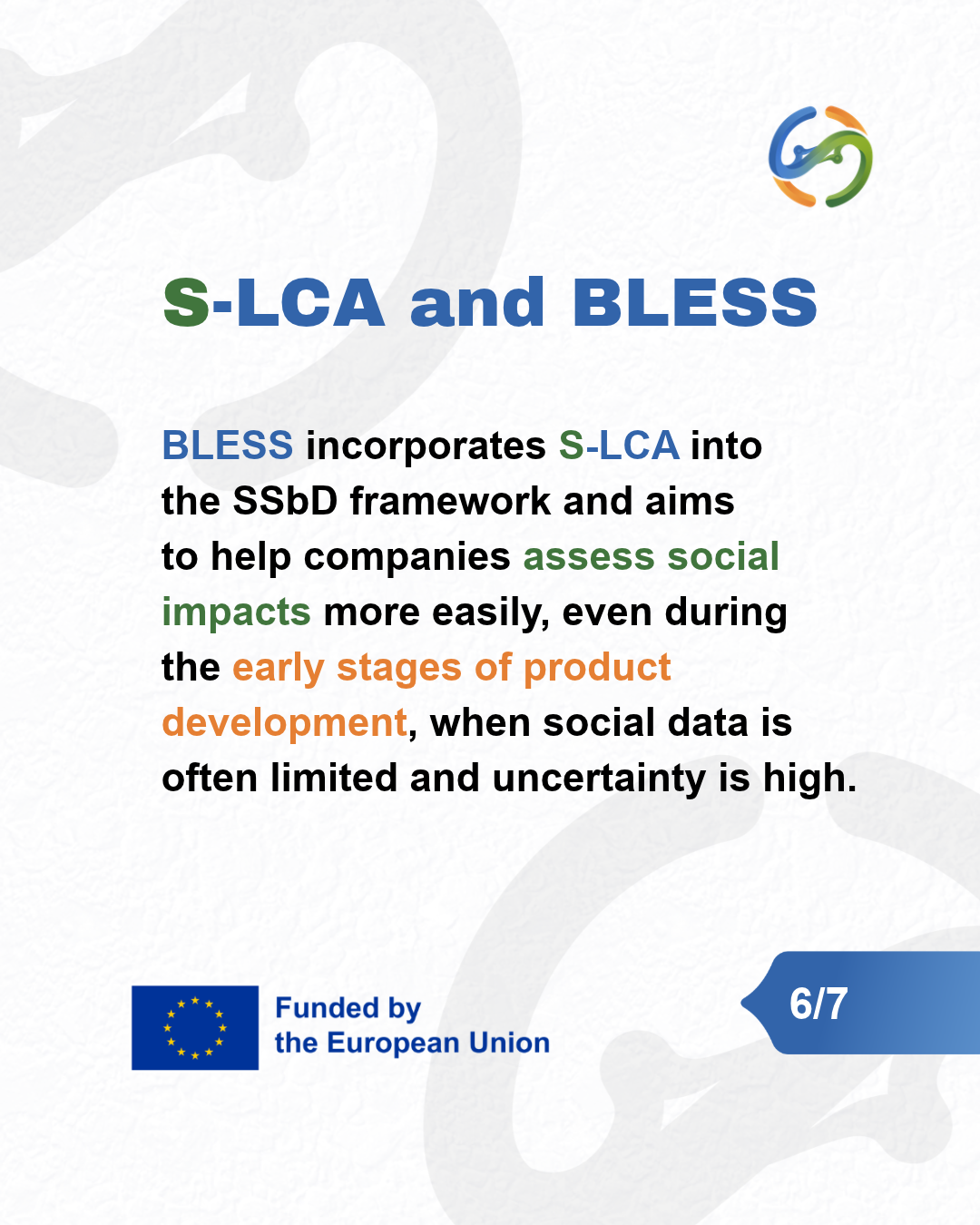
Within BLESS, S-LCA is being incorporated into the Safe and Sustainable by Design (SSbD) framework, which considers environmental, social and economic sustainability alongside safety.
The project aims to make social assessment more accessible and applicable during early development stages, characterized by low social data availability and high uncertainty. Building on established methodologies, including the UNEP S-LCA Guidelines, BLESS will integrate Social Return on Investment (S-ROI) to help quantify the economic value of social outcomes and also monitoring and visualisation tools, that will combine social vulnerability data and supply-chain information to identify social hotspots.
By integrating these aspects into its assessment methodology and digital toolset, BLESS aims to help companies, particularly SMEs, evaluate social impacts alongside environmental and economic performance, supporting more informed and responsible decisions throughout product development.
Stay tuned for the next part of our Life cycle series, where we will continue exploring the methods behind comprehensive sustainability assessments.
In the meantime, explore our social media channels to stay up to date with the latest research and project activities!
